Empowering Journalists: KNCHR Champions Human Rights-Based Reporting for Refugees in Mombasa
Empowering Journalists: KNCHR Champions Human Rights-Based Reporting for Refugees in Mombasa
By: Dominic Kabiru
The Kenya National Commission on Human Rights recently concluded a pivotal media familiarization and sensitization session in Mombasa, aimed at equipping local journalists with the tools to report on refugee issues through the lens of a Human Rights-Based Approach (HRBA). Held on Friday, June 19, 2026, at the KNCHR Coast Regional Office, the session brought together fifteen media practitioners from mainstream and community outlets, marking a significant step towards fostering sensitive and accurate media coverage of urban refugees and their integration with host communities.
The session provided a comprehensive guide to HRBA in documenting, reporting, and covering refugee and asylum seeker issues. The training, prepared in anticipation of World Refugee Day 2026, underscored the theme “Solidarity with Refugees: Until Everyone is Safe,” advocating for solidarity as an act of partnership and inclusion rather than mere charity.
The engagement equally outlined the historical and legal foundations of refugee protection, including the 1951 Geneva Convention and the 1967 Protocol. Distinctions between a Refugee (officially recognized with legal protection) and an Asylum Seeker (whose claim is pending but has a legal right to stay during the process). Key international principles, such as Non-refoulement - prohibiting the return of refugees to territories where their lives are threatened and rights to work, education, and freedom of movement, were thoroughly explored.
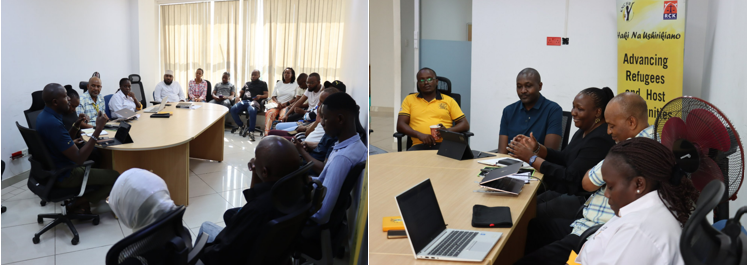
Journalists and KNCHR Team in a round-table session on a Human Rights-Based Approach to documenting, reporting, and media coverage of refugees and host communities. (Photo: Courtesy: KNCHR PAC Division)
The practical application of HRBA in journalism, challenging journalists to move beyond superficial reporting. Journalists were sensitized on core HRBA principles, including Participation, Accountability, Non-discrimination, Transparency, Human Dignity, Empowerment, and the Rule of Law. The session also equipped journalists with the critical questions for reporting on refugee and host community stories.
• Who has been left behind and why? (Whose angle/story has been left out and why?)
• What are they entitled to? (Does the story include what the refugee/host community are entitled to, and their obligations?)
• Who has to do something about it? (Does the story hold any public official/duty bearer accountable for any form of violation?)
• What do they need to take action? (Does the story include challenges duty bearers face or hinder their protection of human rights for the refugees and host communities?)
Emphasis was also placed on generating media content that foregrounds human rights, educates the public on rights and responsibilities, and considers the impact on vulnerable groups, particularly refugees and host communities. The importance of disaggregated data (gender, ethnicity, socio-economic status, age, disability) was highlighted to ensure comprehensive and nuanced reporting.
Mr. Gatobu Kirera, the Head of the Department of Refugee Services (DRS) in Mombasa, addressed the media practitioners, reaffirming DRS’s commitment to the “Solidarity with Refugees” theme through practical action and inclusive policies. He articulated DRS’s dedication to transforming urban refugees from passive aid recipients into active, skilled, and productive contributors to the Coastal region’s social and economic development. Mr. Kirera underscored that DRS’s work is anchored in the 1951 Refugee Convention, ensuring rights to dignity, work, and education for thousands seeking safety and opportunities in Mombasa.

Mr. Gatobu Kirera, Head of the Department of Refugee Services (DRS), addressing media practitioners during a sensitization session on advancing the theme of “Solidarity with Refugees” in Mombasa. (Courtesy: KNCHR PAC Division)
He further observed that urban refugees, despite unique challenges, possess immense potential and valuable skills. DRS, adopting an HRBA, acts as a primary duty-bearer committed to eliminating discrimination, promoting accountability, and enhancing transparency in service delivery. Mr. Kirera urged media practitioners to portray refugees not as a burden, but as resilient individuals whose experiences, contributions, and aspirations deserve recognition, ensuring their voices remain central in discussions and decisions affecting their lives.