The Refugee Dilemma and shrinking resources
The Refugee Dilemma and shrinking resources
By Lynesther Mureu and Harriet Ajiambo
There is power rationing in Kakuma, Turkana County by the time we arrive. Even during the day it’s like the sun is not also happy with the rationing and strikes her rays harder. We have also landed in the season of fuel shortage and fuel hikes so air conditioners awake time is also rationed in any office or hotel you visit. It was the proverbial sweltering heat!
The KNCHR Chairperson, Ms Claris Ogangah was on an induction tour of the camp having just joined the commission 7 months prior to the visit. The Commission, in partnership with the Refugee Consortium of Kenya have been implementing a project dub bed Haki na Ushirikiano which aims at advancing the rights of refugees and host community. The end result is for cohesive integration that facilitates enjoyment of human rights by all.
KNCHR ,UNHCR and LWF teams at a meeting/KNCHR’s visit at the Kalobeyei Reception Centre (Photo Credit: KNCHR/Ajiambo Were)
Kakuma Camp currently hosts over 300, 000 refugees from about 24 nationalities. They are largely run- aways from war torn countries or regions within their countries that are highly volatile. “We cannot run away from the fact that we are now hosting brothers and sisters from across the borders. What we need to do now is think around how we ensure that development efforts incorporate refugees for peaceful co-existence with locals,” said Mr. Joseph Kipkorir, Turkana Deputy County Commissioner. The County Commissioner’s officer is mandated to coordinate matters security and the presence of refugees has a huge aspect of security that the CC’s office is keen to safeguard. Thus to them, development is a critical aspect of security. “Most of these refugees have for long been supported by various partners at the camp who support resources have been dwindling over the recent years. Now we have serious food rationing, meaning refugees are struggling to feed themselves. Without means for the same, they either are in conflict with locals or fight amongst themselves for survival,” he added.
The County and refugee affairs
At the same time, the Turkana County Deputy Governor Hon. Dr. John Erus briefed the KNCHR Chair that the county government is keen collaborate especially with government on refugee work, but resources are a constraint. “We are fully aware of the Shirika Plan and its aspirations. However, we do not receive funding for its implementation and we are relying on donor funding for the same.” he said. On his part, he called for harmonization of laws and policies that target refugees to include the Refugee Act to ensure existing legal gaps are taken care of.
In complimentary to the Governor’s Office efforts, the County Assembly of Turkana has taken affirmative action steps to ensure inclusivity of refugees through offering attachment and internship opportunities to refugees who are in local colleges and universities. Turkana County Assembly Speaker Hon. Charles Lekowoiyete inclusivity is critical for governance in the county and have made all effort to include even refugees in their law making process. “We have amended our standing orders to include refugee matters through the re naming of the Committee on Justice, Legal and
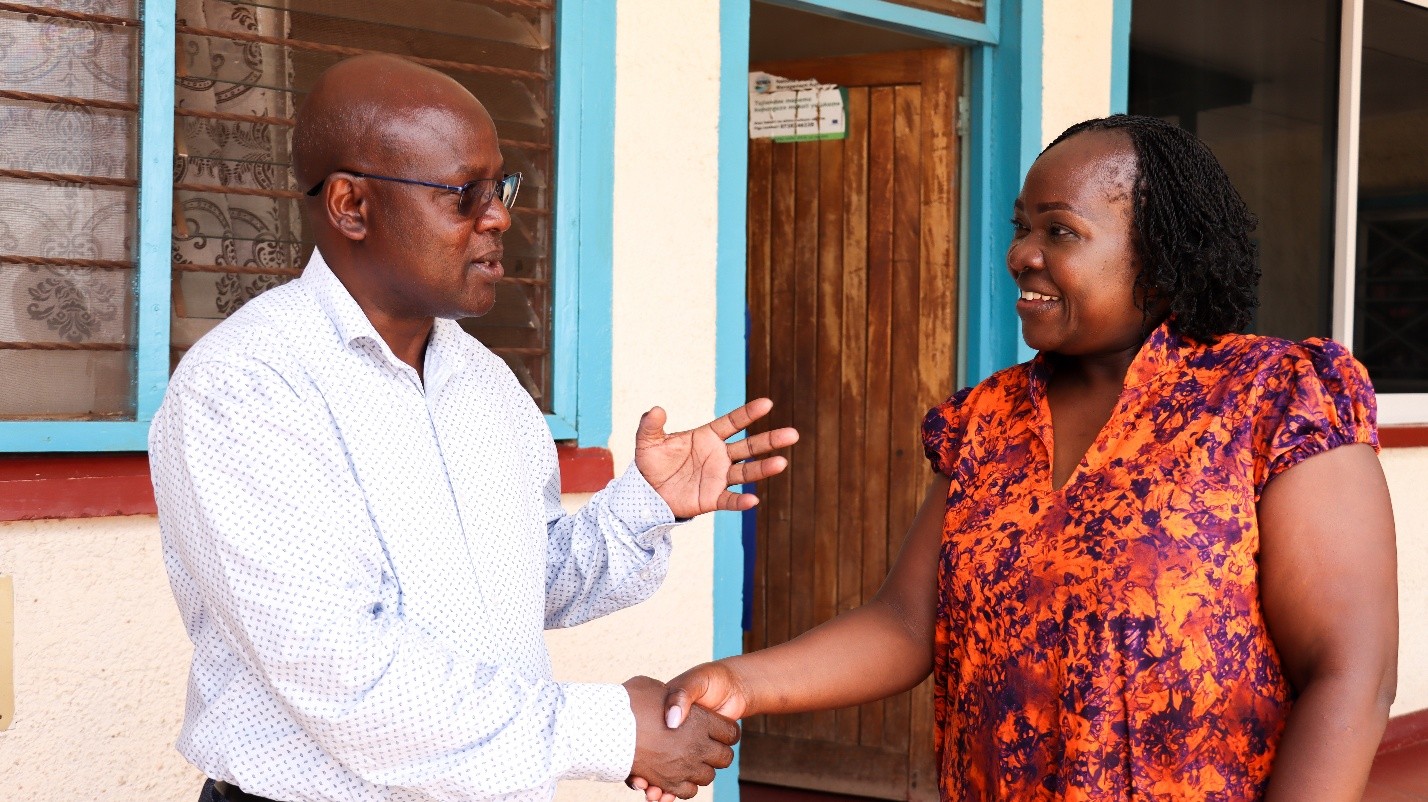
KNCHR’s Chairperson Ms. Claris Ogangah (R) shakes hands with the Deputy Governor Turkana Dr. John Erus (L) during a courtesy visit by the KNCHR to the Deputy Governor’s office. (Photo Credit: KNCHR/Ajiambo Were)
human rights to now read Committee on Justice, Legal human rights and refugee affairs,” he stated proudly. This amendment empowers refugees to petition the county assembly directly and allow them in public participation sessions. “Additionally, the Committee now has a platform for tracking human rights cases in Kakuma Camp by including them in the County Assembly Open days where their leaders can interact with progress of the County and the Assembly,” said the speaker.
Access to Justice for refugees
Hopelessness, frustration and a need to survive pushes refugees to ends that many never thought they would even as they are far away from home. As they fight for limited resources within the camp, they from time to time find themselves on the wrong side of the law and will be caught up in acts of criminality that land them in the corridors of justice. Kakuma Senior Principal Magistrate Ms. Janet Irura who had barely been two months in the station at the time of KNCHR visit was quick to note that disputes in the region, unless of serious criminal nature, are best settled through court mediated alternative dispute resolution mechanisms. “The locals here are not well to do and it is not better for refugee communities. Other than drag matters through the courts that cost money, where we can we are trying to deploy ADR which is also a way of encouraging peace and cohesion,” she says. As a member of the Judiciary’s AJS Board, the Commission is a strong advocate of Alternative Dispute Resolution mechanisms as a means of enhancing access to the right to justice.
While addressing judicial matters in the region, she states that there is also a struggle between the law and culture as the communities within the Camp hold very tight to cultural practices. She also added that the court is sometimes hard to issue bail and bond to refugees, which should naturally be a right, but its issuance offers a risk of flight.
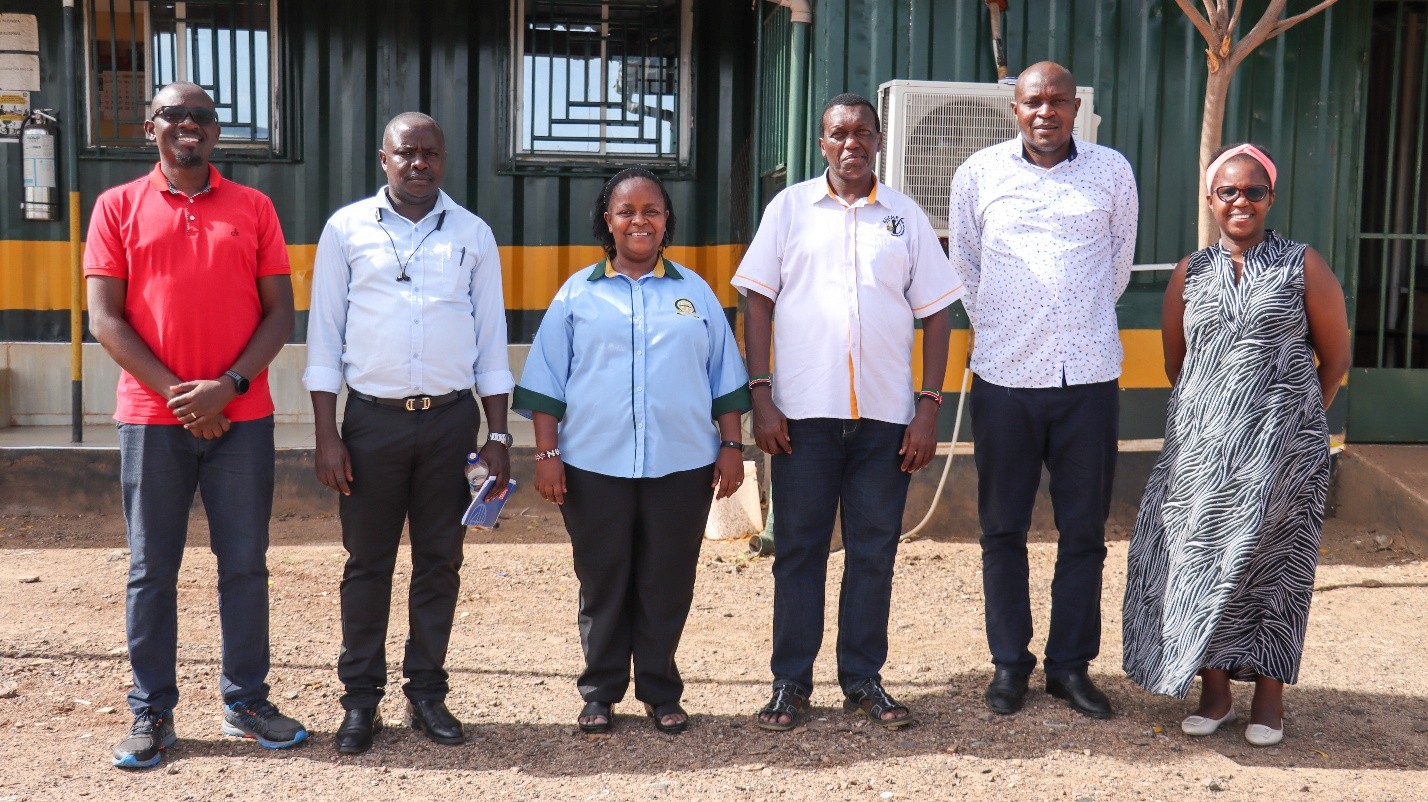
KNCHR team led by the Vice Chairperson Dr. Raymond Nyeris (3rd R) pose for a photo with Senior Principal Magistrate, Kakuma, Ms. Janet Irura (3rd L) at the Kakuma Law Courts. (Photo Credit: KNCHR/Ajiambo Were)
“You can issue someone bail today and they can go commit another crime and cross the border. What do you do with the affected persons of that crime?” she posed.
Management of refugees
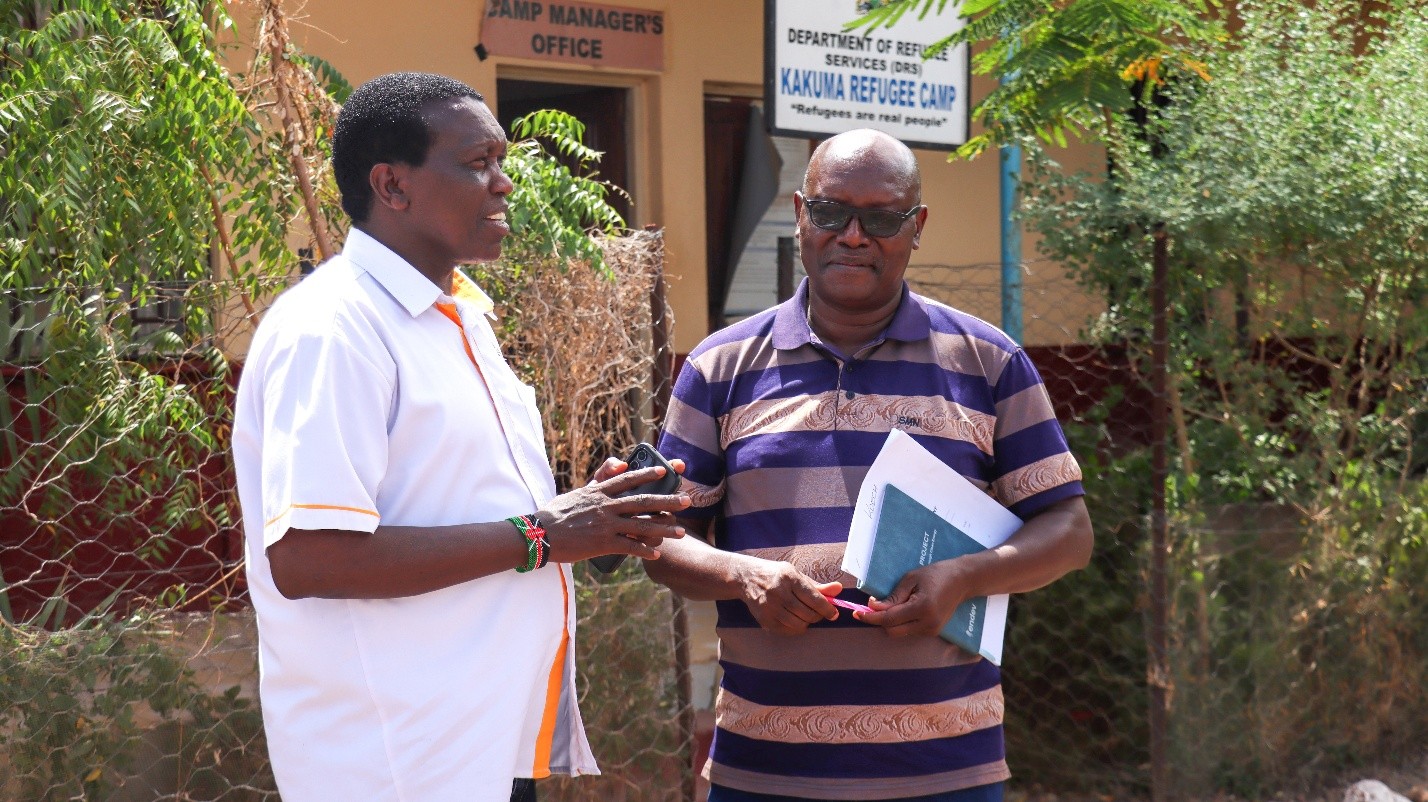
KNCHR Vice Chairperson Dr. Raymond Nyeris converses with the Deputy Camp manager Mr. Jofrey Mutana (L) during a courtesy visit by the KNCHR to the DRS offices in Kakuma, Turkana County. (Photo Credit: KNCHR/Ajiambo Were)
The Directorate of Refugee Affairs estimates that Kakuma now hosts about 314, 000 refugees and counting in a space of about 54 Square Kilometers, a space that will soon not be able to hold the surging numbers. “The land on which we are hosting the refugees belongs to host communities, the more they come, the more we expand into land where locals call home,” said Mr. Jofrey Mutana, Deputy Camp Manager, DRS. The resource strain, he told the Commission, has led to an increase of mental health challenges with a rise in suicide cases. The recent introduction of differentiated assistance which is pegged on need and vulnerability levels is adding to mental health strain. “We are experiencing more cases of spouse abandonment as refugees seek to ‘marry’ a host member and get a new life where ‘opportunities may abound’, “ he pointed.
The United Nations High Commission on Refugees continue to be the lead non state actor in the management of refugees in Kenya. In Kakuma, they take charge of affairs both at Kakuma Camp and the Kalobeyei Settlement schemes. They have been hard hit with resources scarcity to the point of scaling down staff capacity. The shrinking resources have also seen food rations go down and they acknowledge cases of insecurity are growing as the refugees scramble for the little resources and work closely with the DRS and other government agencies to ensure harmony and peace. The KNCHR is in talks with the UNCHR Mission in Kenya to formalize a working relationship through a joint MOU that would strengthen and enhance rights enjoyment by refugees and host communities.
The integration dream
The vision of integration of refugees and host communities remains a noble one as wars and natural calamities continue to push neighboring citizens into our Kenyan borders. The United Nations Declaration of Human Rights has clearly defined rights that are to be enjoyed by all even outside their native countries, and those that states promise to confer to anyone in their borders. The Kenya National Commission on Human Rights and the Country’s National Human Rights Institution will thus continue to ensure the enjoyment of rights by refugees and host communities by working with all relevant state and non-state actors in the quest to make Kenya a safe home away from home.
#HakinaUshirikiano