To Whom Do I Belong?
To Whom Do I Belong?
By Lynesther Mureu and Betty Cherustui
Julia’s Life in Kenya
*Julia (not her real name) arrived in Kenya in 1994 following the genocide that claimed hundreds of thousands of her countrymen. It is not a story she likes to touch on, understandably, because she found a haven and a home in Kenya. When we meet her in Mombasa, she seems content and calm, you can almost barely tell she is a foreigner, until her Kinyarwanda accent sells her out. The full coastal tone is barely there, despite decades living in the coastal city. Trust the strength of our mother tongues; it is not to be underestimated!
The 46 year old refugee bore all three of her children in Kenya, the first of whom joined a local university and is now awaiting to enter her 2nd year of studies. For Julia, she is grateful that all her children have been able to access public primary and public secondary school despite their refugee status. “ I have never heard my children claim or say that their fellow pupils or students have segregated them because they are not Kenyan. I have not heard them say that the teachers picked on them because of their alien identity,” she says while smiling.
The Struggles of Identity
“For me, all I want is for my children to excel and have a better life than mine. They have the opportunity of getting good education and age is catch up with me as well,” she reiterates. Hidden behind her statement is her refugee status and identity documents which she decries limits especially her children’s full potential. “My Children have gone through the local education system, my first one excelled at a local public secondary school and was called to a local university to pursue a degree in education. But now, she cannot get an attachment opportunity because she lacks identity documents,” states Julia, with little sobs in between.
Julia’s identification documents indicate her as being and asylum seeker and as natural as it comes, her children inherit the same status as their mother. As per the law, the status is renewed every 5 years and she has been diligent in ensuring her documents and that of her children are in good standing. “Why can’t my child, born, bred and school through the Kenyan system be granted Kenyan citizenship? I am willing to stay with mine as is but my children be free to be Kenyans,” she ponders.
To fend for the family, she runs a carpentry and woodwork shop whose proceeds go a long way in sustaining especially her first born who is in a University a few counties away.
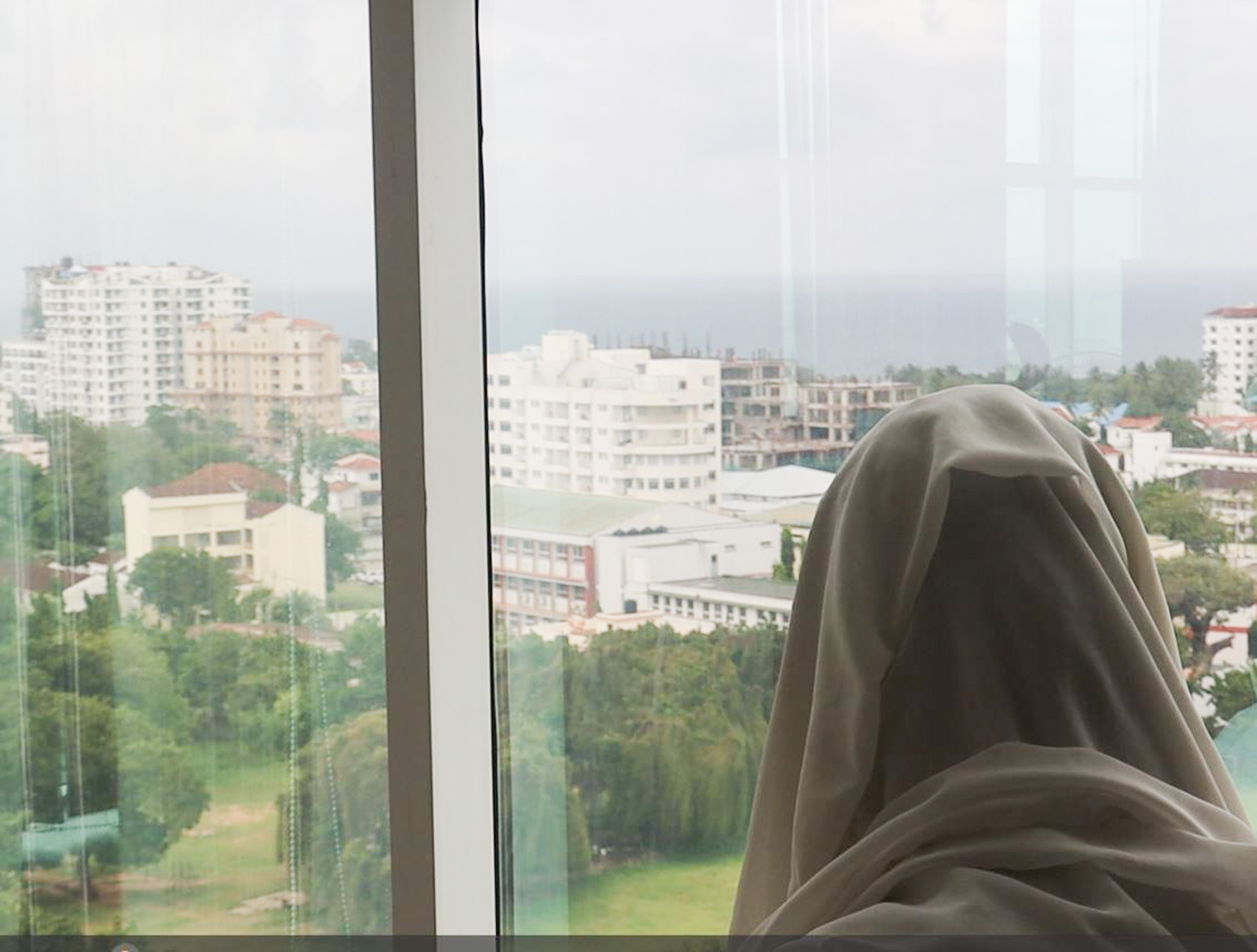
Julia ponders yonder during the Interview at the KNCHR Offices, Mombasa County
Sylvienne’s Hopes and Hurdles
*Sylvienne, Julia’s 19 year old daughter has not been at peace for some months now, she almost refused the interview and let her mum come alone, until she joined us later on. Before we could even interview her, tears flowed and we gave her a moment, before she made her first statement. “I am due for attachment in a month or two, I have a reference letter from my University, where I was called to join using the government system. All has been well until now, when my asylum status is denying me an opportunity to enhance my skills through attachment placement,” says a teary Sylvienne.
She is medium bodied and very soft spoken. She narrates to us her passion in teaching, saying she loves to nurture children and see them grow. She innocently tried to access HELB and refugee scholarships, all but in vain because of her asylum status. She is sad that she can see her classmates effortlessly prosper and get opportunities. “Every time I approach an institution and present my letters for attachment and I have to narrate my refugee status, it pains me and I long for the day it will all end,” she states.
For her Bachelor of Arts in Education course, she will require 3 mandatory practicums at 1st, 2nd and 3rd years respectively. She is only at the first and already facing hurdles. She would like to start planning her life, have a bank account, have access to mobile money platforms, which in Kenya have become a primary mode of transaction, but without an identity card, all these are just but privileges of locals, which she considers herself as one, having been born and bred in Mombasa.
Yet, she soldiers on with hope praying that the new Shirika Plan somehow will be the breadth of fresh air and freedom for her, fellow refugee and asylum seekers.
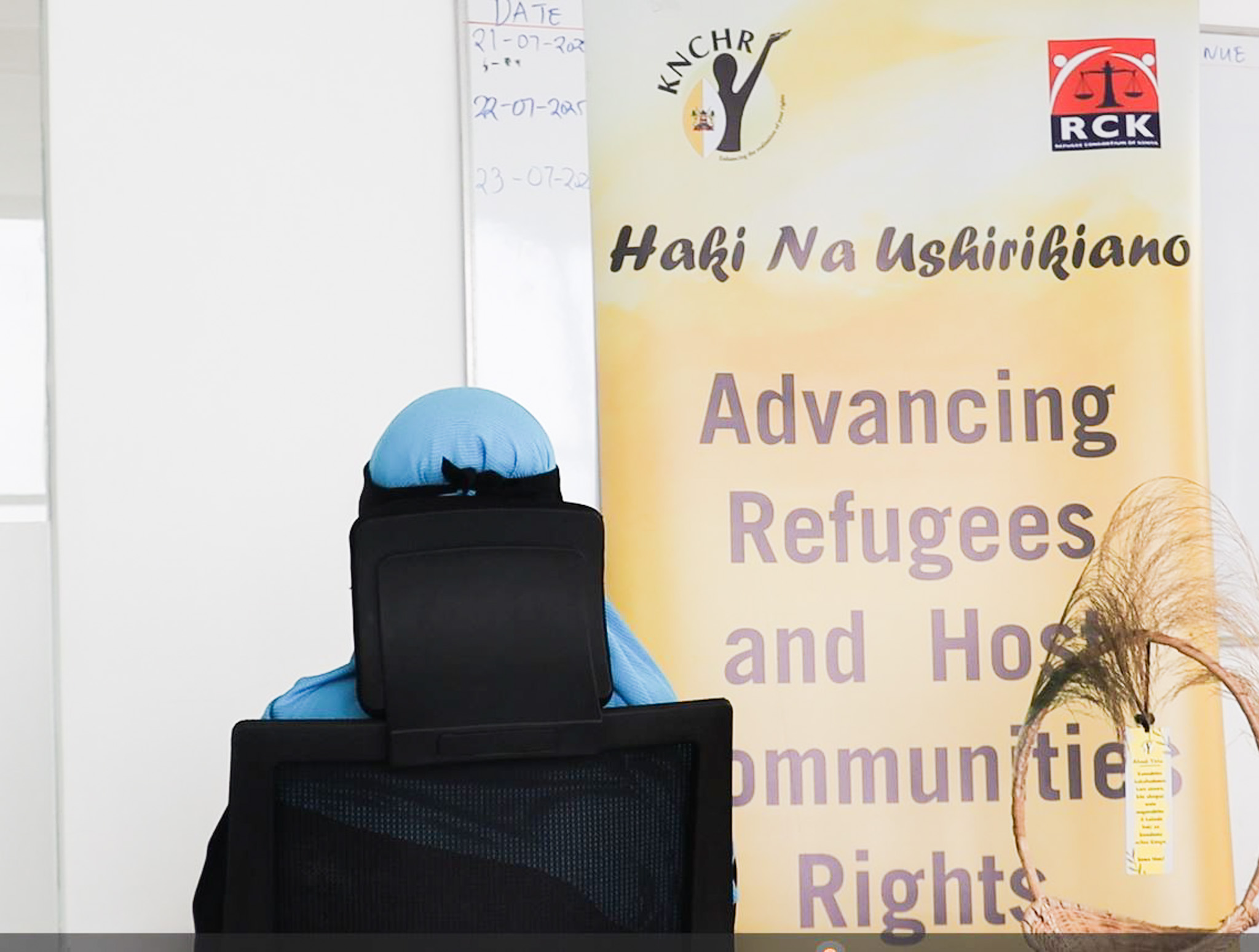
Sylvienne at the KNCHR Mombasa Offices
Policy, Challenges and a Glimpse of Hope
The Department of Refugee Services (DRS) in Mombasa County indicates they have approximately 6000 documented refugee and asylum seekers. Documented meaning those who have been screened at the center and have had formal interaction with the office including renewal of their statuses. However, they approximate the numbers to be higher to a tune of around 12000, with the 6000 or more being undocumented and those is these categories are deemed to be illegally in the County and are supposed to be in the documented camps i.e Kakuma, Kalobeyei and Daadab.
They facilitate access to various services through letters to include children who need to access public schools and in need of school registration, health opportunities such as SHA, mobile service providers and much more. They are quick to note though, that access to some of these services are not automatic and foreign applicants go through a rigorous screening process. “Because of their vulnerability, refugees and asylum seekers can be used and abused by locals in criminal acts such as laundering. That is why we are very keen with every process that we enable them,” says Mr. Peter Mutuma, who has been a key partner in the Haki na Ushirikiano Project that the KNCHR has been running.
On Sylvienne’s and others in similar circumstances, the DRS states that it is possible for Children born in Kenya to apply for citizenship for themselves. They have to come in persons and start the process, which goes through verification processes and considerations. As KNCHR continues to engage in and with refugee and asylum seekers and human rights work through the https://ushirikiano.knchr.org/ project, it is hoped that interventions envisaged will see persons such as Sylvienne gain a Right to Identity and be able to flourish happily as a daughter of Kenya.